Online store: when it truly pays off for your business
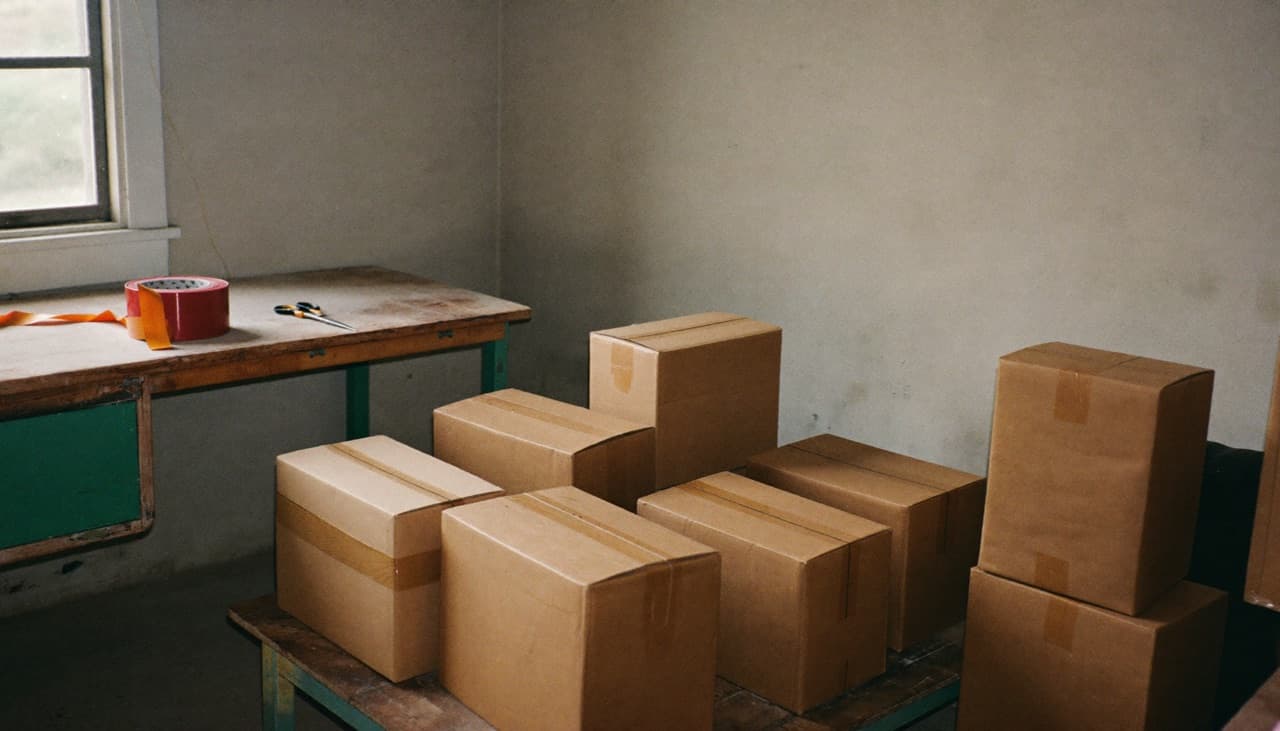
An online store pays off for your business when you sell your products repeatedly, when you would like to sell outside business hours and beyond your narrow local market, and when manually taking orders by phone, email or social media takes up too much of your time. If you recognise yourself in at least one of these statements, the question is probably only when and how, not whether at all. In this article we help you make a calm, sober self-diagnosis, without excessive enthusiasm and without scare tactics.
An online store is not a magic wand that brings your business revenue overnight. It is a tool. Like any tool, it is useful when you use it for the right purpose at the right time. Let us look at when that time has come and when it perhaps has not yet.
Why the decision matters more than the price
Many entrepreneurs reduce the decision about an online store to a single question: how much does it cost. That is understandable but misleading. Price is the easiest part of the equation and also the one easiest to estimate in advance. If you are interested in the rough scope of the investment, you can get an estimate in a few minutes through our calculator.
The far harder and far more important question is another one: what value will the store bring you and are you prepared to make use of that value. An online store you set up and then forget brings nothing. An online store built as part of a thoughtful journey from visitor to satisfied customer can become the most reliable sales channel in your business.
So in what follows we do not talk about costs, but about value, risk and results. These are the factors that decide in the long run whether the decision was a good one.
Seven signs the time is right for an online store
Instead of general advice, let us look at concrete signs. The more of them you recognise, the clearer the answer.
1. You take orders manually and it wears you out
If orders come in by phone, social media messages and email, and you then transcribe each one, calculate shipping and confirm it, you are in fact already an online store, only without the store. You are doing work a system could do. Every hour spent transcribing orders is an hour you did not spend growing the business.
2. You sell the same products over and over
An online store pays off most with repeat sales. If you have a steady range of products you regularly market, every effort put into a tidy presentation, descriptions and photos pays back many times. With one-off, project-based or fully custom services the picture is different, and then a classic presentation site with an inquiry form is often more sensible.
3. Customers ask whether they can order online
This is perhaps the most direct sign. If buyers themselves ask where they can order a product, how they pay and whether you deliver, then demand already exists. You are not creating it anew, you are only letting it express itself. Every such question you answer with "call us" is an opportunity that partly slips through your fingers.
4. Your market is not limited to your home town
If your products can be sent by post or courier, the local market limits you needlessly. An online store opens the door to customers across the whole country and, if you wish, across the border too. A company from Kranj can easily serve a customer from Maribor or Koper without needing an additional branch.
5. You sell even while you sleep
A physical shop and a phone work during business hours. The web knows no schedule. A large share of purchases happen in the evening, at weekends and during holidays, precisely when your business is closed. Without a store these customers simply go elsewhere, to a competitor who is reachable.
6. You have a story and content that build trust
A modern online store is not just a list of products with prices. It is a place where you explain why your product is better, where it comes from, how it is used and who stands behind it. If you have this content or can create it, you will find it easier to turn a visitor into a buyer. Trust is the currency of online sales.
7. You want to measure what works
In a physical shop it is hard to measure how many people picked up a product and put it back on the shelf. Online you see this precisely. How many visitors reached the cart, how many abandoned the purchase, which products are most viewed. This data is invaluable because it tells you where you are losing sales and where you can increase them.
The cost of not having an online store
We often focus on the investment and less often on the cost of inaction. That cost is real, even though it is invisible, because it hides in the form of lost opportunities.
Lost purchases outside business hours. Every customer who would have bought at ten in the evening but had nowhere to do so is lost revenue. You do not see these customers, so you easily underestimate them.
Buyers taken by a competitor. If someone finds you online but cannot order immediately, they often do not return. They look for a similar product at a competitor who enables the purchase. A once-lost customer is as a rule not won back.
Hours spent on manual work. Transcribing orders, manually calculating shipping and reconciling stock cost you time you could devote to developing your offer. This cost is constant and grows in proportion to your success.
Immeasurability. Without an online store it is hard to know what your customers are really interested in. You decide by feeling, not by data, and that very feeling can cost you dearly.
Not every store is a good store
It is important to stress that a bad online store can do more harm than none. A store that is slow, cluttered, unusable on a phone or full of a complicated ordering process drives buyers away and spoils the impression of the business. So it is not just about having a store, but about it being well made.
Some silent killers of online sales:
- A complicated ordering process. Every extra step and every mandatory field reduces the number of completed purchases. Buyers are impatient.
- Unclear delivery and payment information. If a buyer does not know how much shipping will cost or when they will receive the product, they often abandon the purchase right at the end.
- Poor usability on a phone. The vast majority of visits today come from mobile devices. If the store is clumsy on a phone, you lose most of your traffic.
- Slow loading. Every second of waiting drives away part of your visitors. Speed is not a luxury but a condition for selling.
- Lack of trust. Without clear contact details, terms of business and secure payment, the buyer hesitates.
Because of these traps it pays for the online store to be designed by someone who understands both technology and buyer behaviour. Otherwise you can easily build a beautiful shop window through which no one enters.
From visitor to satisfied customer
A good online store is a thoughtful journey. A visitor enters with a certain intent, and your task is to calmly accompany them along that journey to the purchase and further to a repeat purchase.
This journey has a few key stops. First the visitor must find the product, which is a matter of a clear structure and good search. Then they must understand the product, which is a matter of clear descriptions and quality photos. Next they must trust that the purchase is safe, which is a matter of outward impression and technical soundness. Finally they must complete the purchase without friction, which is a matter of a simple process and clear terms.
If any of these stops falters, the buyer falls off the train. So designing a store is always a holistic question, not just a list of features.
How to make an honest self-diagnosis
Before you decide, answer a few questions honestly:
- Do you have an offer you sell repeatedly, or is it one-off projects?
- Are customers already asking about online ordering?
- Can you ship or deliver products beyond your town?
- How much time per week do you spend on manually taking and reconciling orders?
- Do you have content to build trust with, or can you prepare it?
- Are you prepared to regularly maintain the store, add products and monitor data?
If most answers are affirmative, the decision is clear. If not, you may need a different solution, for example a presentation site with an inquiry form or a gradual path that starts more modestly and grows with you.
Frequently asked questions
Do I need an online store if I already have a physical shop?
Often yes, because the two channels complement each other. A physical shop builds personal contact and local presence, while an online one widens reach and sells outside business hours. Together they cover more opportunities than either channel alone.
Does an online store even make sense for a small business?
Yes, and often even more than for large ones. Small businesses have a clear offer and a personal approach, which works well online. The key is that the store fits the scale of operations and grows gradually.
How much work does maintaining an online store require?
Less than many think, but not nothing. You need to regularly add products, monitor stock, take care of security and process orders. A well-designed store simplifies and automates this work as much as possible.
Is it better to start with a small store and expand it?
Often yes. Gradual growth lets you learn from real customers and adapt the store to their needs. It only matters that the technical foundation is designed so that expansion later does not require starting everything over.
How do I know which solution is right for my business?
That depends on your offer, scale and goals. It is best to consult someone who can listen to your business. For this purpose we offer a free consultation where we assess together whether and in what form an online store pays off for you.
Conclusion
An online store is not a goal but a tool for reaching a goal, which is a satisfied customer and stable sales. It pays off when you sell repeatedly, when business hours and the local market limit you, and when you are prepared to truly use the tool. The decision should not rest on price alone, but on the value the store can bring you and on the risk of losing opportunities because you do not have it.
If you were nodding while reading, the right time has probably come. Make an honest self-diagnosis, and if doubts remain, rather consult than delay. At Carpolab we help you design a store that is not just a pretty shop window but a reliable sales channel tailored to your business.
More news
Read all →


Every new article in your inbox
Every new article in your inbox